

Transform Your Brain in 7 Days with Meditation
Meditation, Neuroscience, Mental Health
Could One Week of Meditation Really Rewire Your Brain? Scientists Say Yes
New research from UC San Diego suggests that just seven days of intensive meditation may trigger measurable changes in brain activity, immune function, and cellular health—without drugs or invasive treatments.

Can One Week of Meditation Rewire Your Brain?
Inside the science of rapid mind-body transformation
Intensive retreats can compress months of meditation practice into a single focused week.
We've all heard that meditation is "good for you." It supposedly helps with stress, sleep, focus, and a long list of other things that sound nice but feel a little fuzzy. But what if sitting quietly with your eyes closed could actually change your brain and body in measurable ways, in just seven days? That's exactly what a new study from researchers at the University of California, San Diego is suggesting, and the findings are turning heads in the scientific community.
💡 Pro Tip: When you read about meditation research, look for studies that measure both subjective experience (how people feel) and objective biology (brain scans, blood markers). This one did both.
The study, published in the journal Communications Biology, followed 20 healthy adults through a week-long residential meditation retreat. Over those seven days, participants logged about 33 hours of guided meditation alongside lectures and group healing sessions. Before and after the retreat, scientists scanned their brains using fMRI machines and analyzed their blood for biological markers. What they found was remarkable: a single week of intensive mind-body practice produced changes that, in some ways, looked similar to the effects of psychedelic drugs, without anyone taking a single substance.
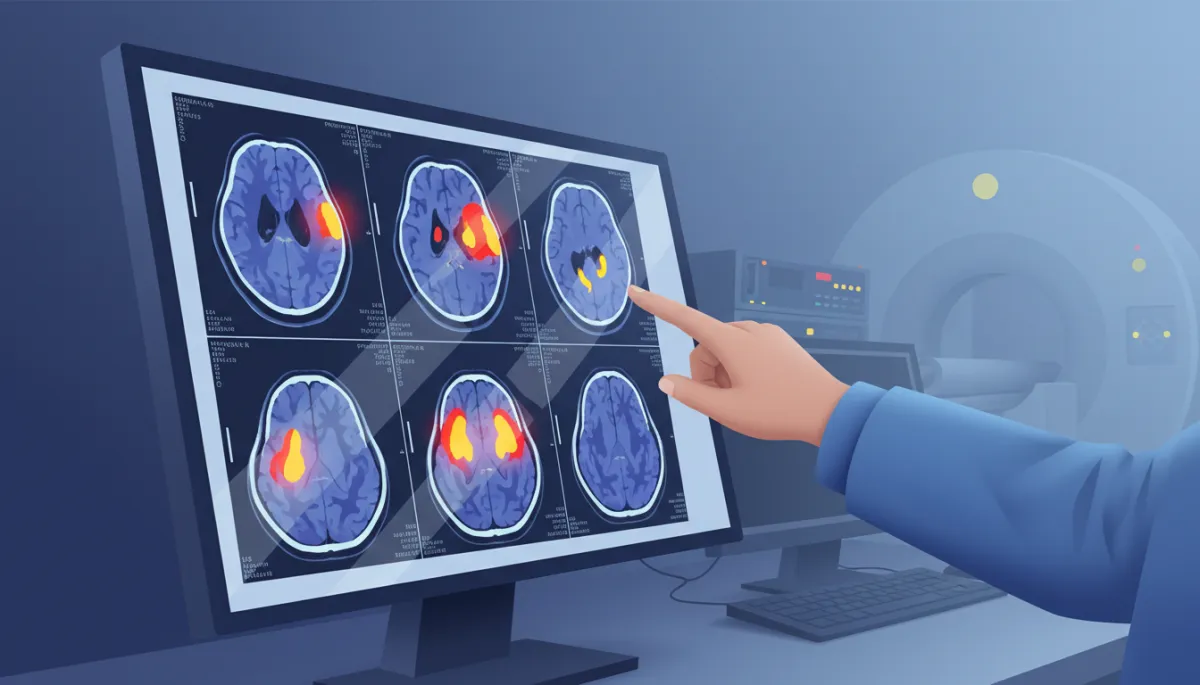
Close-up of fMRI brain scan images on a large monitor, with a researcher pointing at highlighted...
Brain imaging allowed researchers to see how meditation altered activity in key neural networks.
What Actually Changed in the Brain and Body?
So what actually changed? Quite a lot, as it turns out. Brain scans showed reduced activity in the regions tied to constant mental chatter, the kind of inner voice that keeps replaying awkward conversations or running tomorrow's to-do list on a loop. Their blood told an even more interesting story. Plasma drawn after the retreat actually encouraged neurons grown in a lab to extend and form new connections, a sign of enhanced neuroplasticity. Levels of the body's natural painkillers, called endogenous opioids, went up. Immune signaling shifted in ways that suggested a more balanced and adaptive response. Even cellular metabolism appeared to become more flexible.
Less mental noise: Reduced activity in brain regions linked to rumination and self-talk.
More plasticity: Post-retreat blood helped neurons grow and form new connections in the lab.
Natural pain relief: Increased levels of endogenous opioids, the body’s built-in painkillers.
Immune balance: Shifts in immune signaling pointing toward a more adaptive response.
Microscope view of glowing neuron cells with long branching connections against a dark...
Post-retreat blood samples promoted neuron growth, hinting at meditation’s impact on plasticity.
"We're seeing shifts at multiple biological levels after just one week of intensive practice."
— Interpretation based on UC San Diego research findings
A Different Way of Engaging with Reality
Senior author Hemal H. Patel, a professor of anesthesiology at UC San Diego, summed it up bluntly: this isn't just about feeling relaxed. He described it as "fundamentally changing how the brain engages with reality" in ways scientists could measure directly. Participants also reported stronger feelings of unity, transcendence, and altered awareness, and the people who reported the most profound subjective experiences also showed the biggest biological changes. In other words, what's happening in your mind during deep meditation seems to be tightly linked to what's happening in your cells.

Person sitting cross-legged on a cliff at sunset overlooking a wide valley, soft golden light,...
Deep meditative states often coincide with both subjective insight and measurable biological shifts.
📌 Key Takeaway: The most profound inner experiences tended to match the largest changes in brain and blood markers—suggesting mind and body were shifting together.
Important Caveats Before You Book a Retreat
There are some important caveats worth keeping in mind before you book a week off work. The study was small, with only 20 healthy participants, and the retreat itself was led by Joe Dispenza, who is also a co-author and runs the company offering the program. The researchers used what's called an "open-label placebo" approach, meaning expectation and group dynamics likely played a role in the results. We also don't yet know how long these changes last, or whether they'd be just as powerful for someone meditating at home for shorter sessions instead of attending an intensive retreat.
⚠️ Warning: This was a small, highly structured retreat with motivated participants. Don’t assume the exact same effects from a casual, one-off session at home.
Small sample size (20 people) limits how widely we can generalize the findings.
The retreat was led by a co-author, raising questions about potential conflicts of interest.
Open-label design means participants knew the intent, which can amplify expectations and placebo effects.
Duration and durability of the changes are still unknown.
Conference-style meditation hall with instructor at the front and participants seated in rows,...
Study results reflect a specific intensive program, not everyday casual practice.
What This Means for Your Everyday Meditation Practice
Still, the takeaway for the average person is genuinely encouraging. You don't need exotic substances or expensive treatments to influence your brain and body in meaningful ways. Even a regular, sustained meditation habit may be quietly rewiring how your brain processes stress, pain, and emotion. As first author Alex Jinich-Diamant put it, what we believe and where we focus our attention can leave "measurable fingerprints on our biology."

Person sitting comfortably on a sofa at home with headphones on, eyes closed, phone in hand...
Consistent short sessions at home can still support long-term brain and stress resilience.
💡 Pro Tip: Aim for 10–20 minutes a day of focused practice. Consistency matters more than intensity for most people.
If you've been on the fence about trying meditation, this might be a decent nudge to give it a real shot. You probably won't have a mystical experience after ten minutes with a meditation app, but the science is increasingly clear: your mind and body are talking to each other constantly, and meditation appears to be one way to join the conversation.
Simple Ways to Get Started with Meditation
Start with 5 minutes a day of quiet breathing and gradually increase the time.
Use a guided meditation app if you're not sure what to do or how to focus.
Pick a consistent time—morning, lunch break, or before bed—to build a habit.
Treat it like a mental workout: some days will feel easy, others won’t, and that’s normal.

Top-down view of a simple meditation setup at home with a cushion, journal, pen, glass of water,...
A simple, repeatable setup makes it easier to show up for daily practice.
Source: Scientists say 7 days of meditation can rewire your brain — ScienceDaily
